
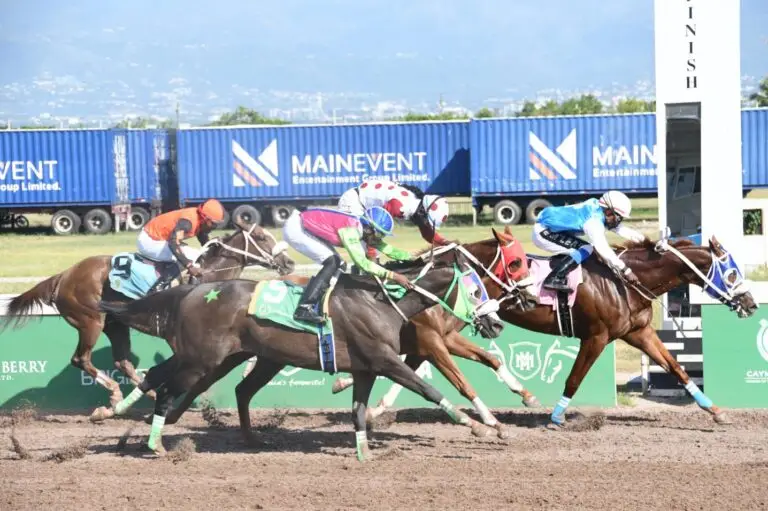
Another race day unfolded with a familiar and troubling pattern: a card dominated by short-priced runners, where certainty replaced suspense and wagering enthusiasm quietly drained away. With eight races effectively decided before the gates opened, the event once again underscored the structural weakness now gripping the local racing product.
At the core of the issue is not merely form or talent, but design. The continued reliance on an expansive claiming-based framework has fragmented an already thin horse population into an excessive number of divisions. Instead of fostering depth and competition, it has produced narrow fields and distorted matchups, often forcing lesser animals to receive weight concessions against clearly superior opposition. The outcome is inevitable — lopsided races and a flood of odds-on selections.
This environment is corrosive to betting behaviour. Horse racing, unlike a pure chance lottery, thrives on calculated uncertainty. When outcomes appear obvious, bettors retreat, staking conservatively or disengaging altogether. Exotic wagering options lose their appeal when “bankers” are plentiful and unpredictability is scarce. The commercial damage to the promoter is subtle but persistent.
On the track, the day unfolded with clinical efficiency rather than drama. The opener went to Hit N Run, who required a measured ride to edge clear late over seven and a half furlongs. The following juvenile contest offered no such tension, as Mohanlal delivered a dominant, double-digit victory that reflected the imbalance of the field more than any tactical nuance.
Momentum continued in race three with Uncle Peck, whose task was little more than procedural under a confident handling. The afternoon’s lone shock arrived next, when longshot Warsaw defied market logic, dictating terms from the front and clinging on resolutely — a rare moment where risk briefly outperformed expectation.
The straight-course events reverted to script. Belleza Gris, lightly raced and still developing, prevailed comfortably, while Feeling Free provided a milestone victory for his young rider in a controlled, workmanlike performance. By this stage, patterns were firmly established.
Later races became showcases for established stables. The Parsard family enjoyed a productive afternoon capped by I’m Outstanding, whose commanding win further highlighted the gulf in class. A polished double from the Nunes operation followed, with Papa Uso and The Hot Dancer winning with authority rather than resistance.
Honours on the day rightly went to Warsaw, whose preparation defied his well-known quirks, earning trainer Raymond Townsend recognition for extracting peak performance from a difficult but talented colt. The ride itself was equally commendable, combining judgment and resolve.
Yet individual excellence could not disguise the broader concern. Racing cannot survive on inevitability. Without fuller fields, sharper classifications, and genuine competition, the sport risks becoming a procession rather than a contest — and wagering, its lifeblood, will continue to thin accordingly.
