
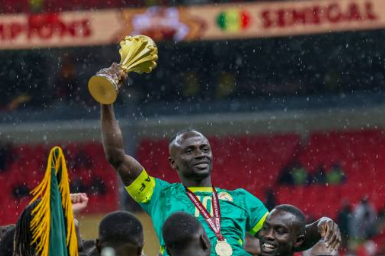
Dakar turned into a moving carnival on Tuesday as Senegal’s Africa Cup of Nations winners rolled through the capital, trophy aloft, in a celebration that felt less like a parade and more like a national exhale.
From early morning, waves of supporters poured into the streets, draped in green, yellow, and red, chasing the slow crawl of an open-top bus carrying the victorious squad. Chants, horns, and vuvuzelas fused into a single wall of sound that followed the team from neighborhood to neighborhood.
The procession began in Patte d’Oie, a densely packed, working-class district where fans climbed onto walls, cars, and rooftops for a glimpse of their heroes. Children sat on shoulders. Elderly men leaned out of windows. Entire families abandoned their routines to witness a moment Senegal will file into its permanent memory.
Security units flanked the route, but they were largely ornamental against the tide of emotion. Supporters jogged alongside the bus, waving flags inches from the players, shouting names, snapping photos, and reaching out as if to physically confirm the win was real.
The team had arrived late Monday night on a special flight from Morocco, where senior government figures greeted them at the airport. Less than 24 hours later, the country itself took its turn.
The victory itself still hung heavy in the air. Senegal edged hosts Morocco 1–0 in a final that veered into chaos late in regulation. A disputed penalty sparked an on-field protest, a brief walk-off, and a tense standoff before play resumed. Senegal’s goalkeeper denied a chipped spot-kick attempt, and Pape Gueye delivered the decisive strike in extra time, silencing the Rabat crowd and sealing a second continental crown for the Lions of Teranga.
None of that turbulence dulled the celebration. If anything, it sharpened it.
“This team didn’t just win a match. They defended our pride,” said one supporter as the bus passed. Others echoed a simple refrain: Senegal had conquered on hostile ground, and that made the triumph sweeter.
Star forward Sadio Mané drew the loudest cheers. His calming role during the stoppage — persuading teammates to return to the pitch — elevated his status from hero to statesman in the eyes of many fans lining the route.
The parade wound through both modest districts and upscale quarters before gliding along Dakar’s iconic Corniche, the Atlantic Ocean shimmering beside a sea of humanity. The final destination: a formal reception near the presidential palace later in the day.
Beyond the noise and confetti, the win carries historical weight. It marks Senegal’s second AFCON title, following their 2022 victory, and their third appearance in a final across the last four tournaments — a run that cements them as a modern African powerhouse.
Even commerce bent to the moment. Street vendors ditched their usual stock for jerseys, flags, whistles, and vuvuzelas, cashing in on the patriotic surge. For many, the tournament wasn’t just a sporting event; it was an economic season.
As dusk approached and the horns still hadn’t gone silent, one thing was clear: this wasn’t just a celebration of a football trophy. It was a collective declaration that Senegal had arrived, stayed, and intends to dominate.
And in Dakar, for one long, euphoric day, nothing else mattered.
