
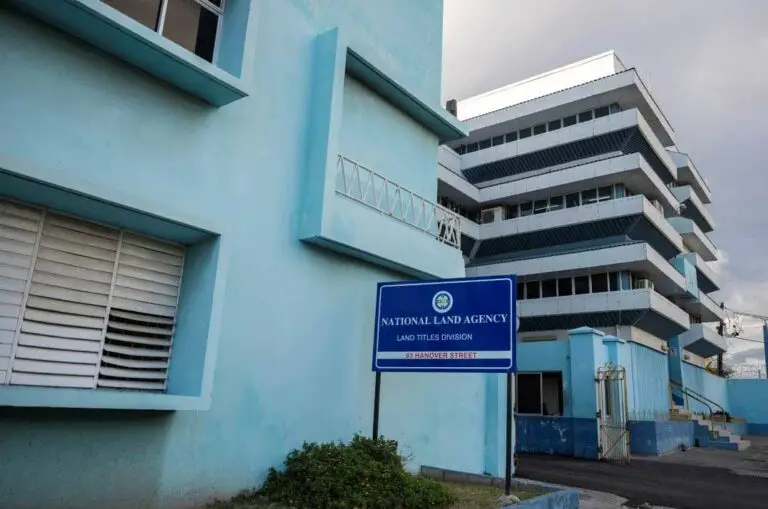
For years, one of Jamaica’s most critical public institutions operated with a blind spot at the heart of its finances.
A new Auditor General review has revealed that the National Land Agency (NLA) went extended periods without properly verifying its bank balances, leaving public funds vulnerable to error, misuse, and silent loss.
The findings, published in the Auditor General’s 2024/25 Annual Report, stem from an examination of the agency’s 2011/2012 financial year. What emerged was not a single lapse, but a systemic breakdown in routine financial discipline.
Several NLA bank accounts were left unreconciled for years. In some cases, reconciliation delays stretched close to eight years. Others carried no dates at all, eliminating any evidence of managerial review or approval. In practical terms, the agency had no reliable way of knowing whether its recorded cash matched what sat in the bank.
The auditor described the environment bluntly: prolonged gaps in reconciliation created conditions where discrepancies, accounting errors, and fraud could exist undetected for extended periods.
These failures also breached government financial rules, which require every public entity to reconcile its accounts monthly. That safeguard exists to detect anomalies early. At the NLA, it simply wasn’t happening.
The control problems did not end with cash.
Auditors also found weaknesses in how the agency tracked its physical assets. Although the NLA maintained an inventory listing assets valued at $93.4 million, it failed to record new purchases worth an additional $10.6 million made during the same period.
The omission violated national asset management policy and left the agency unable to confirm whether assets existed, where they were located, or whether they remained in service. The auditor warned that such gaps increase exposure to theft, loss, and misappropriation.
The implications extend well beyond accounting.
The NLA underpins Jamaica’s land ownership system. It manages titles, surveys, valuation data, and geographic records that form the backbone of property rights and development. Weak financial governance inside such an institution raises concerns about stewardship of some of the country’s most valuable public assets.
In response, the Auditor General urged immediate strengthening of internal controls, strict enforcement of monthly reconciliations, and upgrades to asset tracking systems. The goal: restore visibility over cash and property before further risk accumulates.
The NLA has since told auditors it plans to automate parts of its reconciliation process, targeting implementation by March 2027. But the report cautions that automation alone will not fix unresolved discrepancies already embedded in the accounts.
The message is clear.
Before systems, software, or reforms can succeed, the agency must first regain control over the fundamentals: know what it owns, know what it holds, and know where the money truly is.
