
KINGSTON, Jamaica — Jamaica’s education sector is shifting from reactive to resilient as leaders call for a systemic overhaul of how the nation approaches early childhood development in the face of rising environmental and social challenges.
At the centre of this recalibration is a renewed urgency around the formative years — birth to age five — where research continues to confirm that the architecture of the human brain, emotional intelligence, and learning behaviours are largely constructed. Experts agree: the real investment in national transformation begins before primary school.
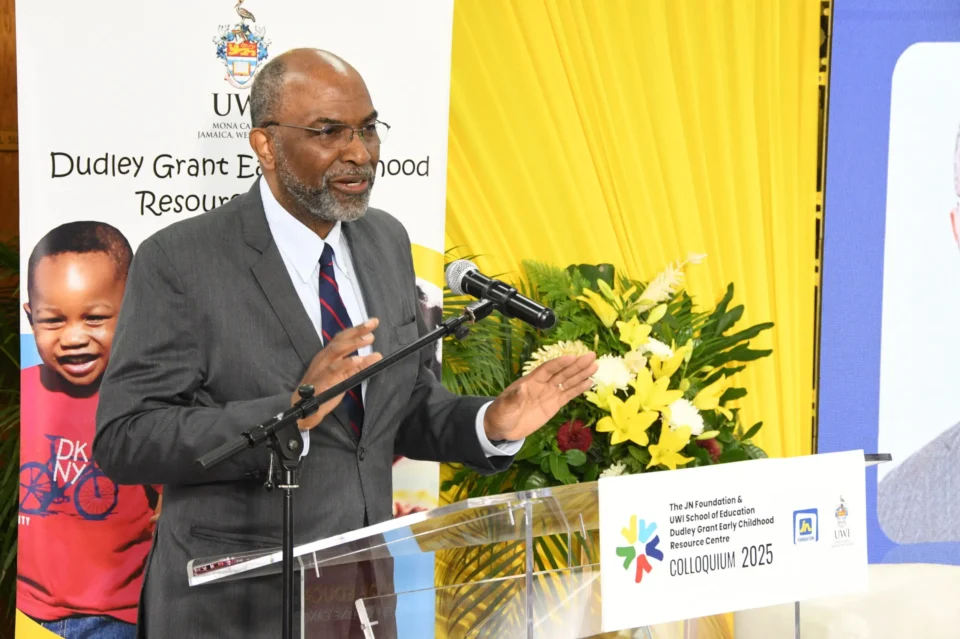
During a high-level regional forum held recently in Kingston, educators, policymakers, and private sector leaders convened to dissect what it truly means to build durable systems around the nation’s youngest citizens. The forum coincided with a tribute to Dudley Grant, the pioneering education strategist credited with formalising early childhood education in Jamaica. His grassroots philosophy of using everyday items as educational tools is now being reimagined through digital and climate-resilient lenses.
Corporate Jamaica Called to Engage
Earl Jarrett, CEO of The Jamaica National Group, made a direct appeal to businesses to not only support maternal and early childhood health but to see it as core to national economic continuity.
“Early childhood is not a charitable line item — it’s the first phase of workforce development,” he said. “Companies must move beyond symbolic CSR and actively shape the environments their future employees will emerge from.”
Jarrett’s call comes against the backdrop of a critical demographic and economic shift, where Jamaica’s labour market is tightening and productivity demands are rising. He warned that failure to invest in the early years could result in a long-term deficit of adaptable, emotionally stable, and skilled citizens.
Preparedness Must Be Embedded, Not Performed
Minister of Education, Senator Dr Dana Morris Dixon, delivered sobering remarks following Hurricane Melissa’s impact on dozens of early childhood institutions. “We’re not just preparing for a storm. We’re preparing for a future where crisis is normal,” she stated.
The Ministry is collaborating with ODPEM to design bespoke emergency preparedness protocols for early childhood centres. This includes a major rework of teacher education curricula, ensuring all early childhood educators are equipped with crisis management capabilities from the onset.
“Preparedness cannot be a seasonal performance,” Morris Dixon warned. “It must be baked into how we train, plan, and allocate resources — not just at the Ministry level, but at every institution, every day.”
Technology, Equity, and Emotional Safety
Participants engaged in cross-sector workshops on integrating digital tools without eroding emotional development, creating inclusive learning environments amid widening economic disparities, and fortifying physical infrastructure against climate volatility.
One key proposal under review is a regional fund dedicated to safeguarding early childhood institutions against disaster-related damage, particularly in rural and underserved communities.
Towards a Human Capital Revolution
As Jamaica enters a new socio-economic era, stakeholders agree that early childhood development cannot remain a niche concern. It must be reframed as the nucleus of national development, with every dollar invested in a three-year-old today seen as GDP insurance for 2050.
The message is clear: a nation’s resilience begins in the crib, not the boardroom.
