
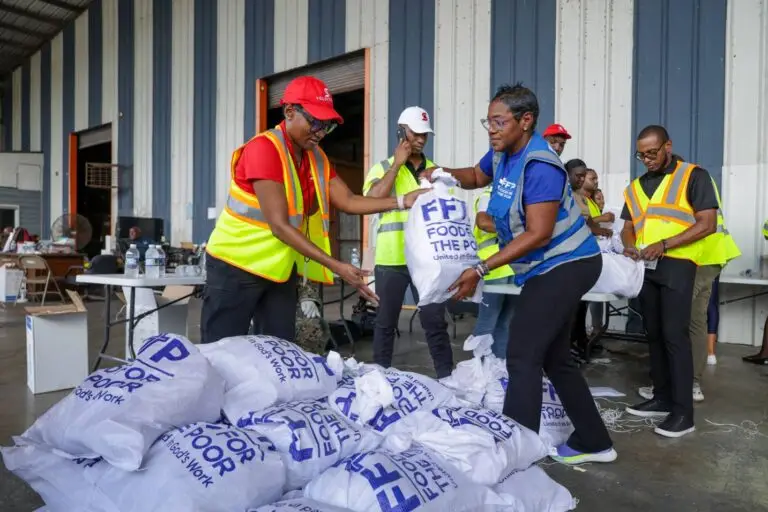
Jamaica’s financial powerhouses have shifted into humanitarian overdrive following the destruction left behind by Hurricane Melissa, channeling emergency capital and manpower into nationwide relief initiatives.
Scotia Group Jamaica has allocated $18 million directly to Food For The Poor Jamaica to fund the distribution of care packages, forming a key part of its broader $165 million commitment toward national disaster recovery. The funds are being deployed to deliver critical food supplies and hygiene items to families cut off or displaced in the aftermath.
CIBC Caribbean, supported by its parent group, has responded with a US$500,000 package—approximately J$79.5 million—designed to support both frontline emergency operations and longer-term community recovery. Their plan includes financing the establishment of a field hospital in Savanna-La-Mar, deploying financial aid, and issuing prepaid cards to vulnerable families to secure daily necessities.
But it’s not just about money. Both banks have activated internal teams—Scotia volunteers are packing and coordinating logistics for relief parcels, while CIBC is overseeing direct community outreach, including employee support and rural outreach missions in hard-hit zones.
What’s emerging is not just corporate charity, but a blueprint for how Jamaica’s banking sector is doubling as a disaster response unit—one capable of moving fast, deploying capital, and filling logistical gaps left by strained public systems. From field hospitals to financial liquidity, these institutions are acting as both stabilizers and rebuilders.
As the island counts the cost of the storm and begins its long climb back, the financial sector’s quick pivot into recovery mode is delivering more than just aid—it’s signaling to thousands that recovery isn’t just possible, it’s already underway.
