
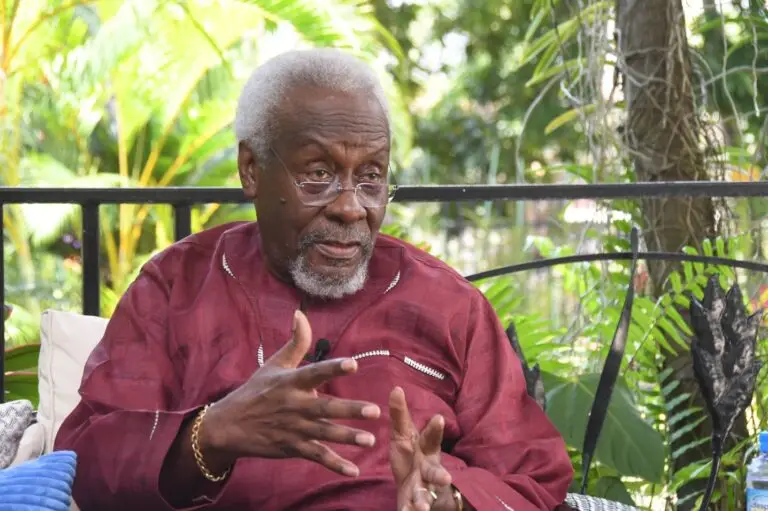
KINGSTON, Jamaica — With climate volatility reshaping the region’s weather patterns, former Prime Minister PJ Patterson has issued a blunt call for a fundamental rethinking of how Jamaica prepares for and responds to disasters, warning that denial and delay are no longer options.
Speaking at a high-level crisis response workshop in New Kingston, Patterson, joined by fellow former Prime Minister Bruce Golding, addressed senior figures from government, business, and civil society. The forum, hosted by Infinity Trainers, was prompted by the widespread damage left in the wake of Hurricane Melissa—an October storm that underscored Jamaica’s exposure to climate risk and infrastructure fragility.
“The Age of Melissa” Demands New Thinking
Patterson described Hurricane Melissa not as a freak event but as a marker of a new era—one that will demand not just adaptation but transformation. He criticized the tendency to rationalize disasters through superstition or cyclical thinking, urging the country to confront the reality of increasingly aggressive storm systems fueled by warming oceans.
“This isn’t the 1980s anymore,” he said. “Storms are faster, stronger, and more frequent. If we don’t re-engineer our entire disaster response model, we will remain exposed—structurally and economically.”
Decades of Delay on Building Code Reform
In a striking moment, Patterson revealed that Jamaica is still operating without a fully enacted modern building code—almost two decades after his administration drafted one. He cited this as emblematic of the country’s sluggish institutional response to mounting environmental risks.
“We cannot keep building like it’s 1985 and expecting 2025 weather to be kind,” he warned, calling for stricter enforcement, smarter zoning, and the relocation of vulnerable communities despite emotional or cultural resistance.
Beyond Hurricanes: A Nation on a Fault Line
Patterson expanded the conversation beyond hurricanes, reminding the audience that Jamaica also lies along a major seismic fault. “We’re sitting on a geological time bomb. Disaster readiness cannot begin and end with a hurricane forecast,” he said, referring to the Enriquillo–Plantain Garden fault zone that could unleash a catastrophic earthquake without warning.
The Price of Complacency
He pointed to public vandalism of utility infrastructure, unsafe hillside construction, and weak law enforcement as signals that too many Jamaicans still see disaster preparation as optional.
“Preparedness is not about convenience—it’s about survival,” he stressed. “When we fail to enforce the law, we erode the very system designed to protect us.”
Reframing Resilience as Policy, Not Charity
The workshop, hosted by Elaine Wint, Elaine Commissiong, and Jerome King-Johnson of Infinity Trainers, sought to shift national disaster planning from reactive charity drives to proactive systems thinking. The event concluded with a clear takeaway: resilience must be engineered, not hoped for.
Patterson’s final message was unflinching: “The next storm may not give us time to correct old mistakes. We either act now or pay later—with lives, livelihoods, and a nation’s stability on the line.”
