
GraceKennedy is redrawing the blueprint for its money-services and food divisions, signaling a strategic shift from legacy operations toward leaner, digitally-anchored, and locally-empowered growth engines.
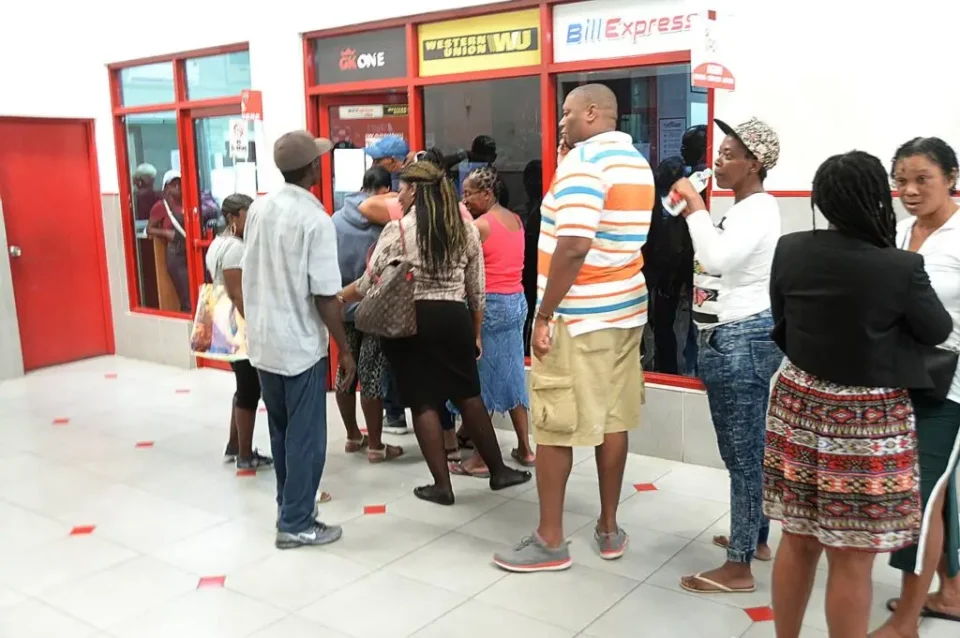
On the financial side, falling global remittance fees have forced the conglomerate to abandon old certainties. Once buoyed by a robust cash-pickup model, GK’s money-transfer segment now finds itself navigating a new era of razor-thin margins. The segment, though still significant, delivered only 22% of pre-tax profits in 2024 — a notable contraction from 27% the year prior.
But leadership isn’t panicking. CEO Frank James made clear that the pressure is structural, not competitive. As sending costs drop worldwide, volume remains resilient. What’s needed, he asserts, is a reengineered business model — one that scales digitally and trims distribution overhead without compromising customer convenience.
That vision is already unfolding. Digital transfers, which accounted for just 8% of remittance revenue in 2023, surged to 12% in 2024. That momentum is expected to accelerate further, especially as regulatory headwinds like the upcoming U.S. remittance tax loom on the horizon.
GraceKennedy is betting on seamless integration to lead the charge. Instead of funneling customers through traditional agent locations, it’s embedding remittance pickups into everyday experiences. A current pilot at Hi-Lo Barbican allows shoppers to collect money transfers directly at the checkout counter — collapsing errands, cutting queues, and trimming operational cost.
Meanwhile, remittance volumes continue to climb, reinforcing GK’s assertion that it’s gaining ground despite thinner margins. Central bank data, James confirmed, shows an uptick in market share, underscoring the brand’s staying power even as the terrain shifts.
Food Division Surges Forward with Local Focus
While financial services recalibrate, GK’s food segment is charging ahead with bold supply-chain moves and strategic brand expansion. Its flagship Zesty line has grown to include a green seasoning crafted entirely from Jamaican farm produce. The new product, processed and bottled in Clarendon, is more than a nostalgic nod — it’s a tactical pivot toward domestic sourcing amid climate volatility.
With Hurricane Melissa wreaking uneven damage across crops, GK’s diversified inventory approach paid dividends. Ackee harvests were decimated, but high stock levels and flexible sourcing ensured price stability in high-demand categories like jerk seasoning.
Farmers in regions like Hounslow are now central to the company’s recovery and production plans, reflecting a larger vision of rural integration and food sovereignty.
The food division’s contribution to group pre-tax earnings climbed to 64% in 2024 — up sharply from 57% — establishing it as the company’s primary profit driver. That momentum, powered by local resilience and product innovation, shows no sign of slowing.
Conclusion
GK is neither defending the past nor resisting change. It is recalibrating — shifting from transaction-heavy to experience-driven in money services, and from import-heavy to farm-integrated in food manufacturing. As the twin engines of digital and domestic scale up, GraceKennedy is not just reacting to new realities — it’s rewriting them.
