
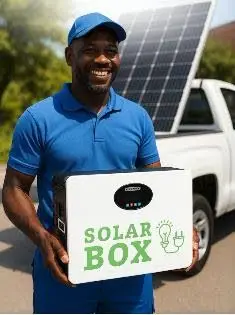
As power outages continue to disrupt daily life following Hurricane Melissa, a wave of Jamaicans are turning to compact solar power kits to keep essentials running. The recent spike in demand reflects a growing shift toward energy independence and household-level resilience.
Sold by local firms under the Solar Essentials brand, these self-contained solar units—also known as “solar boxes”—are providing homeowners with a practical alternative to fuel-powered generators. Built specifically for backup use, each unit offers plug-and-play functionality to power critical items during grid failure, without the noise or fuel cost associated with traditional options.
“These kits are built for practicality, not full home coverage,” a Solar Essentials team member shared. “Think of them as your power safety net—perfect for your fridge, phone, router, and lights. But they’re not designed for heavy-duty loads like washing machines or air conditioners.”
The systems feature a 700-watt solar panel, deep-cycle battery, and a smart controller to manage flow and efficiency. Most models are rated for 110 volts and support a continuous draw of up to 1,000 watts. Users are encouraged to manage usage strategically—such as rotating between appliances day and night—to get the most out of the available stored energy.
For instance, a typical routine might involve running a refrigerator during daylight hours, then switching over to lighter items like fans or lamps overnight. “Fridges consume the most juice, so if it’s running, we advise against using anything else at the same time,” the representative added.
Priced at $200,000 and offered in a do-it-yourself format, the kits include all the mounting hardware, wiring, and components needed for standalone setup. Each purchase also comes with an instructional video to guide customers through the installation process—appealing to those who want self-sufficiency without added technician fees.
With household electricity costs rising and national grid reliability under stress, consumers are increasingly viewing these systems as long-term investments. Solar Essentials noted that customers can see savings of $5,000–$10,000 monthly by offloading daily essentials to the solar kit.
The company is already seeing signs of an inventory shortage, with post-storm sales accelerating far beyond forecast. Reorders from international suppliers are underway, with new units expected to arrive ahead of the next hurricane season. Each kit is expected to last up to a decade under standard usage conditions.
As more households seek affordable resilience, compact solar systems are becoming a fixture in Jamaica’s evolving energy landscape—an emblem of the country’s growing commitment to self-reliance amid climate uncertainty.
