
In the aftermath of Hurricane Melissa, Jamaica’s education sector is confronting more than just damaged buildings and broken equipment. The psychological toll on thousands of students and educators has prompted an unprecedented state-funded mental health intervention.
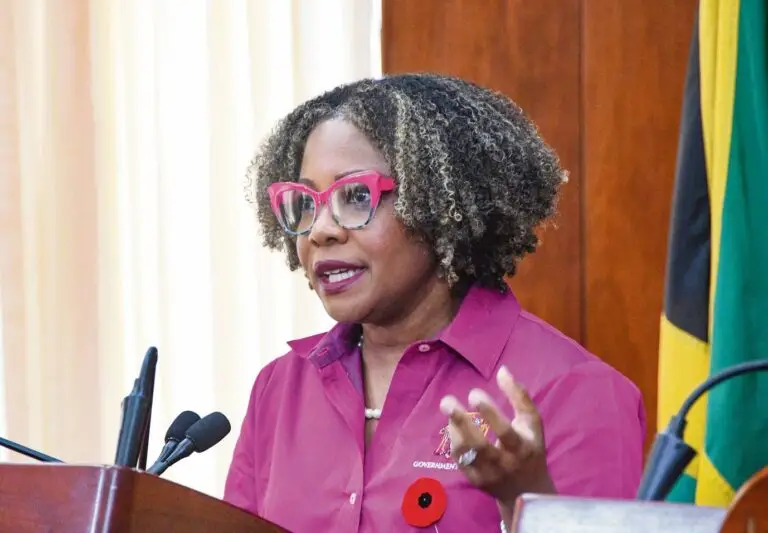
Education Minister Senator Dr. Dana Morris Dixon announced that the Government will fully cover the cost of private mental health care for all affected students and teachers. The initiative follows a nationwide assessment revealing that over 111,000 students and nearly 5,000 staff members had their lives abruptly disrupted by the Category 5 storm, which made landfall on October 28.
Many lost homes. Others lost entire communities. For some schools, only the foundation remains.
“Some schools no longer exist in any form—only a wall or slab of concrete signals that a school once stood there,” said the minister in her Senate address.
Beyond the physical destruction, the emotional impact has been profound. Educators are being asked to guide students through trauma while processing their own losses. Some have relocated entirely, like one young girl who had to move from Montego Bay to Trelawny after her home was destroyed.
To address this, the Ministry of Education activated a nationwide trauma response framework through its Guidance and Counselling Unit. Support is now structured into three tiers: national coordination, regional oversight, and direct school-level interventions. These include tele-counselling from 53 guidance counsellors, targeted therapy sessions, and wellness activities.
Critically, an arrangement with private psychologists and psychiatrists ensures that specialized clinical help is accessible without cost. A directory of available clinicians and volunteer counsellors has already been shared with school administrators via official bulletin.
Parents haven’t been left out. Four parenting support hotlines have been relaunched to provide emergency psychosocial assistance, alongside over 55 parent mentors mobilized through the National Parent Support Commission. In the hardest-hit parishes, walk-in mental health aid for families is being rolled out.
As of November 19, 78% of public schools—roughly 791 institutions—have resumed operations. Yet, the path to full restoration remains uncertain. Initial assessments indicate 679 public schools and 21 tertiary institutions sustained storm-related damage. Some face total reconstruction.
To fast-track reopening, the ministry introduced the Rapid Resumption Grant, allocating emergency cleanup funds between $300,000 and $1 million per school, based on severity. So far, over $325 million has been disbursed to more than 500 schools for debris removal, sanitation, and reconnection of basic utilities.
But while bricks and mortar can be replaced, the long-term emotional scars left on Jamaica’s school communities may take far longer to heal. The Ministry’s focus on comprehensive, accessible mental health services signals a recognition that recovery is not just about resuming classes—but rebuilding lives.
