
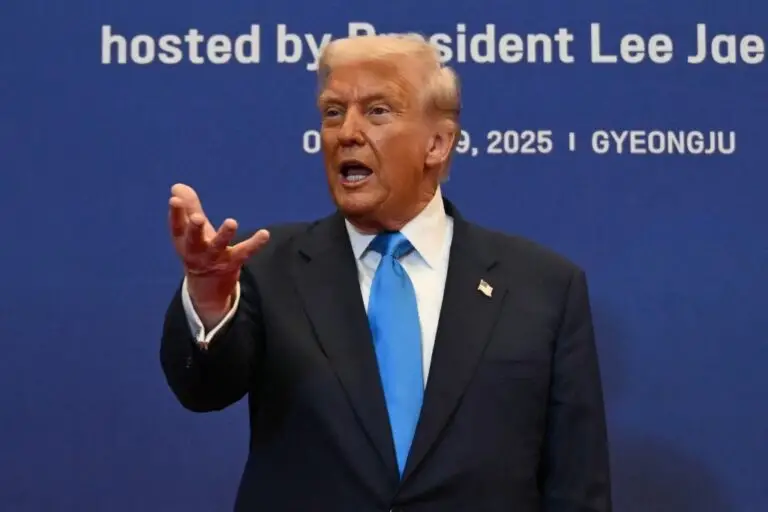
The firestorm surrounding the Epstein scandal reignited this week after a convincingly generated audio clip, falsely portraying former U.S. President Donald Trump, went viral across social platforms—fueling misinformation in an already volatile political landscape.
The synthetic recording, circulated primarily by left-leaning content creators, featured a Trump-like voice angrily demanding the suppression of documents linked to the late financier Jeffrey Epstein. The voice bellows: “Not releasing the Epstein files. If I go down, I will bring all of you down with me.” The clip was quickly shared across TikTok and Instagram, where it racked up millions of views and incited a cascade of inflammatory commentary.
However, the audio is entirely artificial.
Analysts from a disinformation watchdog have confirmed that the clip was generated using advanced AI tools, likely OpenAI’s Sora model. Initial uploads contained subtle visual cues betraying its synthetic nature, but subsequent re-posts removed these watermarks—deliberately erasing signs of manipulation and making the clip appear authentic.
Adding to the confusion, a viral quote falsely attributed to White House Press Secretary Karoline Leavitt claimed that the Epstein documents refer to “a different Donald Trump.” That post alone gained over four million views before being debunked by official White House accounts, which denied the statement outright and ridiculed its spread.
The incident underscores a broader pattern: misinformation is no longer the exclusive domain of fringe actors. It is now a weapon deployed across the political spectrum, reshaping narratives, leveraging AI, and spreading chaos on increasingly unmoderated platforms.
This episode comes amid renewed political clashes over the long-sealed Epstein files. While Trump publicly signed a bill this week mandating their release, his administration had previously resisted the move for months. Insiders warn that redactions, bureaucratic maneuvers, and open investigations could still be used to stall or dilute the disclosures.
Trump, who had personal ties to Epstein in the past, continues to deny any involvement in his alleged crimes, stating flatly: “I have nothing to do with that.”
Epstein’s 2019 arrest on sex trafficking charges—and his suspicious death while in federal custody—triggered international demands for transparency. His connections to global elites across politics, academia, finance, and entertainment continue to fuel speculation, with the public hungry for answers and accountability.
As the official unsealing of government documents looms, the digital battlefield is already saturated. AI-manipulated content, partisan distortions, and algorithmic amplification are reshaping how the public engages with sensitive historical truths—long before the facts see daylight.
