
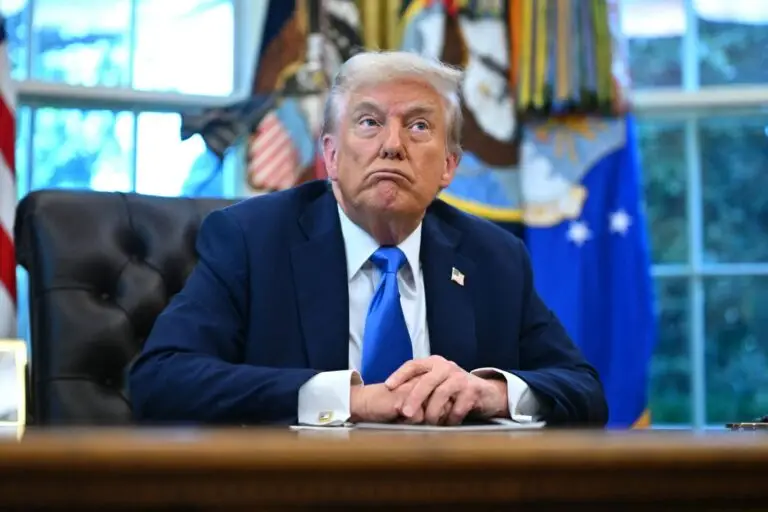
LONDON — Britain’s national broadcaster is grappling with its deepest internal shakeup in over a decade, following the abrupt resignations of Director General Tim Davie and BBC News CEO Deborah Turness. The resignations come amid an escalating political storm over an edited broadcast of former U.S. President Donald Trump’s January 6 speech, which critics argue distorted the original message and implied he had directly incited the Capitol attack.
The broadcast, part of a major BBC documentary series, reportedly rearranged Trump’s remarks to make it appear he had encouraged violent action — omitting context where he called for peaceful support of congressional allies. The editorial decision has triggered outrage, political scrutiny, and a renewed wave of criticism from both domestic and international commentators.
Accountability at the Top
Turness, in her resignation message, stood by the broader editorial integrity of BBC News, dismissing claims of institutional bias. However, the fallout proved too severe for the corporation’s senior leadership to weather. Tim Davie, long regarded as a stabilizing force at the helm of the BBC, stepped down amidst mounting pressure. Parliament is expected to grill BBC chair Samir Shah for answers, as the broadcaster attempts to contain reputational damage.
Political Ripples and Public Reactions
The backlash has not been confined to the UK. Trump celebrated the resignations, denouncing BBC journalists as “dishonest” and alleging long-standing bias against him. In the UK, reactions have split down political lines. Conservative voices, including former PM Boris Johnson and Tory leader Kemi Badenoch, have amplified longstanding critiques of the BBC’s impartiality. Badenoch labeled the events as “a culmination of repeated failings,” while Johnson once again questioned the legitimacy of the licence fee model.
On the other side, Liberal Democrat leader Ed Davey accused Trump and his allies of undermining a vital democratic institution, urging Prime Minister Keir Starmer to publicly defend the BBC against foreign interference. “This isn’t just a media issue,” Davey said. “This is about sovereignty.”
A Crisis Beyond the Headlines
For many, the deeper issue lies in public trust. With viewers already wary of partisan media, the controversy has struck a nerve. Jimmy, a construction worker interviewed in central London, expressed his disillusionment: “You trust the BBC to play it straight. But it feels like the mask slipped.”
Others urged caution. Jennifer Kavanagh, a retired academic, noted that criticism of the BBC is nothing new. “They’re always being accused — either of leaning left or kowtowing to the right. But I believe in them. I hope they find their balance again.”
Systemic Strains and Editorial Scrutiny
The controversy comes as the UK government prepares to review the BBC’s charter — a process that will shape the corporation’s funding, governance, and role in British society for years to come. Culture Secretary Lisa Nandy has called the allegations “deeply concerning,” and the BBC’s own internal documentation reportedly flagged the edit as problematic prior to public fallout.
The incident echoes previous editorial missteps. Earlier this year, the BBC was forced to admit serious failings in a documentary covering the Gaza conflict, and it drew fire for not intervening during politically charged live content at Glastonbury Festival. These compounding episodes have raised questions over the BBC’s internal standards enforcement and its vulnerability to political influence in an increasingly polarized media landscape.
Looking Forward
The process of appointing a new director general is expected to stretch into 2026. In the interim, BBC leadership must navigate not just a reputational rebuild, but a reassertion of editorial integrity at a time when public institutions worldwide face challenges to their credibility.
With the eyes of both Westminster and Washington trained on it, the BBC stands at a critical juncture: recalibrate, reform, or risk erosion of the trust that has long defined its global standing.
