
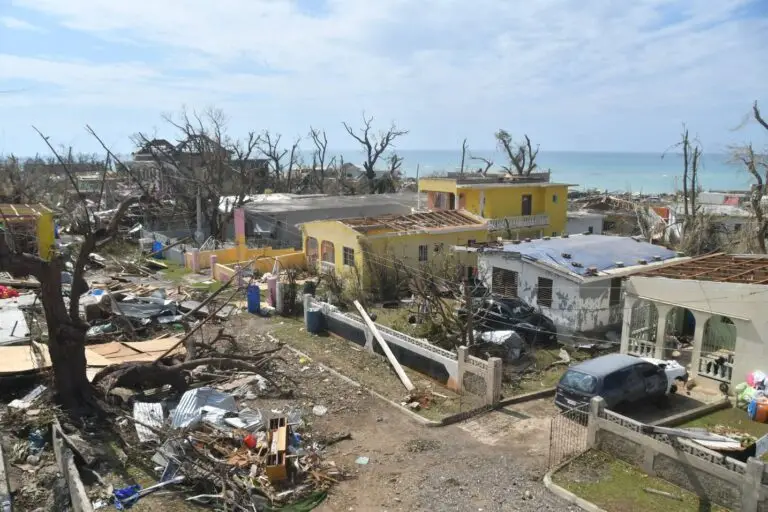
In the wake of Hurricane Melissa’s brutal passage, the nation now faces a long and expensive road to recovery—one that could cost upwards of US$7 billion, placing severe strain on an economy still rebounding from earlier shocks.
The financial toll, estimated to consume nearly a third of the country’s annual output, has prompted urgent recalibrations at every level—from national budgeting to street-level commerce. The storm’s disruption was not just atmospheric—it rewired the circuits of the economy, knocking entire industries offline and forcing a pause on Jamaica’s otherwise steady momentum.
Sectoral Damage & Short-Term Outlook
The blow to agriculture is immediate and visible. Fields once green with promise have been flattened or flooded, leaving farmers in triage mode. Crops will need time, funding, and favorable conditions to re-emerge, and livestock operations—many of which lacked sufficient storm protections—must be rebuilt nearly from scratch.
Tourism, while showing signs of resilience, has not gone unscathed. Several resort zones remain in partial shutdown as crews race against time to restore utilities and reestablish safe travel corridors. Officials are scrambling to re-inspire confidence among international travel agents, as brand damage from media coverage threatens to outlast the storm itself.
SMEs Face Liquidity Crunch
Perhaps most vulnerable in the current climate are the thousands of small and medium-sized businesses now caught in limbo. From corner shops to fashion ateliers, from back-end manufacturers to entertainment venues, these enterprises absorbed the brunt of the storm with little buffer. Many are now in a liquidity chokehold—unable to generate cash flow while being burdened with repair costs and disrupted supply chains.
Restarting these businesses will require more than optimism. Stakeholders are already signaling the need for specialized financial relief: working capital injections, tax forbearance, and targeted grant mechanisms to plug the revenue gaps left in Melissa’s wake.
The Path Forward
What lies ahead is not merely a rebuilding phase—it is a stress test of the country’s economic architecture. Policymakers are under pressure to craft a response that doesn’t just patch holes, but strengthens the nation’s structural resilience. This includes accelerated infrastructure upgrades, digital redundancy planning for businesses, and climate-smart agricultural investments.
Recovery won’t be linear. But with sharp decisions, coordinated financial support, and public-private resolve, the country could emerge from this disaster not just restored—but reconfigured for a more shock-resistant future.
