
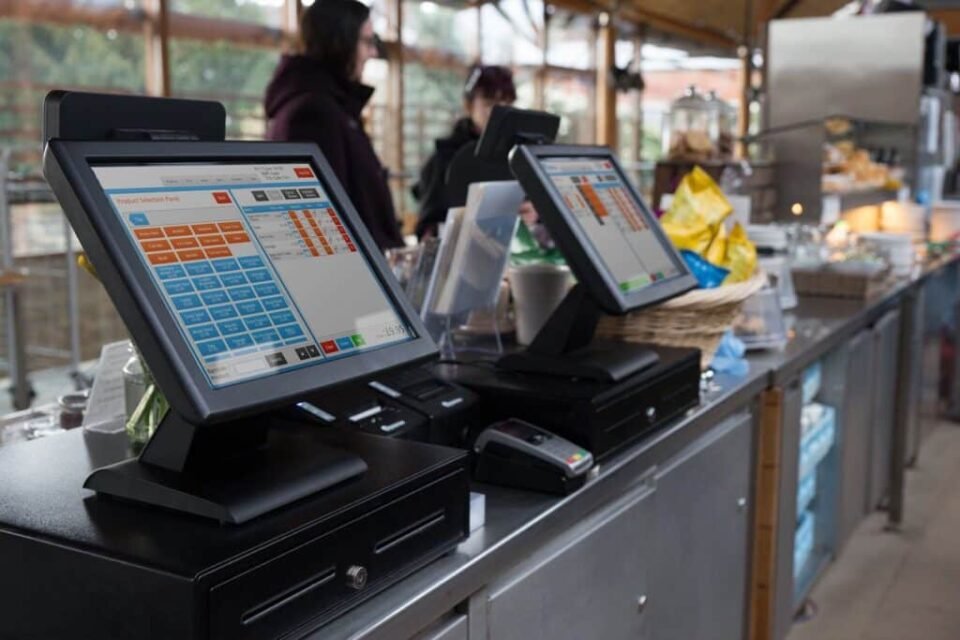
NEW ORLEANS, LA — A silent transition is sweeping through the restaurant industry as cloud-controlled payment infrastructure begins replacing traditional payment terminals in mid-sized and enterprise hospitality chains across the United States.
Unlike flashy front-end tech trends, this shift is happening behind the counter—deep inside payment networks—where PCI compliance, real-time device management, and encrypted transaction orchestration are becoming critical to restaurant operations.
At the center of this quiet overhaul is a platform known as Connected Payments, designed by NCR and adopted by leading restaurant technology providers. The system removes sensitive card data from the store level entirely and places compliance, device health monitoring, and encryption enforcement inside the cloud.
“This isn’t just an upgrade in hardware—it’s a full structural pivot away from on-premise exposure,” said a regional IT manager for a national restaurant chain that recently migrated 128 locations to cloud-managed terminals. “It’s compliance-first architecture.”
The switch isn’t merely about keeping up with card-scheme mandates. Cloud-based management allows IT teams to monitor every payment terminal across every location in real time—flagging offline devices, updating software remotely, and verifying encryption without manual audits.
Hospitality groups have also praised the system’s processor-agnostic design, which gives merchants the ability to select their preferred acquirers without tearing out existing infrastructure.
That flexibility has drawn interest from multi-brand restaurant owners and franchises operating across state lines. “You’d be surprised how many operators are locked into bad payment contracts simply because of terminal entanglement,” said a payments consultant advising several QSR clients in Florida. “With this model, they can pivot processors without touching a single countertop device.”
Meanwhile, the back-end consolidation of tokenization, fraud filtering, and logging into a centralized cloud service is helping mid-market restaurant groups sidestep the spiraling cost of maintaining PCI compliance in-house.
One unexpected use case: some groups are now using these platforms to streamline acquisition rollouts. By standardizing the payment stack in advance, newly acquired locations can be brought online and PCI-compliant within 48 hours—something previously unthinkable.
Next Stop: International Markets
Although most deployments remain U.S.-based, industry insiders suggest Caribbean and LATAM markets may soon follow. Terminal fleets across the region still rely heavily on static configurations and local server dependencies, leaving operators exposed to data leaks, downtime, and compliance fines.
“We’re watching closely how this cloud model performs under scale,” said a fintech executive advising a digital bank in the Caribbean. “The moment it proves stable outside the U.S., we’re moving merchant fleets over.”
With digital payments now accounting for over 80% of transactions in quick-service and casual dining, the race is no longer about adopting cashless models—it’s about owning the control layer.
If Connected Payments and its counterparts succeed in locking down the terminal layer, restaurants may find themselves not just PCI-compliant—but finally untethered from legacy payment rails.
Let me know if you want a Jamaica‑specific angle, or quotes from industry stakeholders like BOJ regulators, local merchant groups, or POS hardware vendors.
